BREXIT TERROR STUDY

Letter to the editor of The Times, published 24 August 2017. © Richard Kemp

The leaked Home Office report (Aug 23) warning of an increased terrorist risk to the UK after Brexit is pure fiction. The opposite is true: Britain will be safer after Brexit.

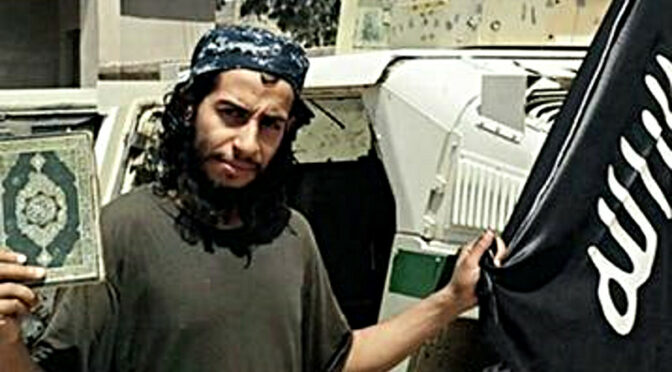
No longer will we have to allow known terrorist suspects who are EU citizens to enter the UK as we do now. We should not forget that Abdelhamid Abaaoud, the Belgian ringleader of the November 2015 Paris attacks in which 130 people were killed, travelled freely to Britain beforehand despite being known to be involved in extremism. Such is the EU’s security regime that he boasted in Islamic State propaganda of being able to travel unnoticed into and around Europe.

The report says that security co-operation would be ‘less effective or slower’ once Britain left the EU. Why should it be? The UK has the most effective counter-terrorism operational capability in Europe with the most extensive liaison relationships in countries from where the greatest Islamic terrorist threats emanate.

Our intelligence services have prevented numerous terrorist attacks in the UK and elsewhere in the EU in recent years. In the fight against terrorism the EU needs us far more than we need them.

Colonel Richard Kemp
Former commander of British forces in Afghanistan

Image: Abdelhamid Abaaoud
What Europe can learn from Israel in its war against vehicle attacks and lone wolf terror

Article published by International Business Times, 21 August 2017. © Richard Kemp and Arsen Ostrovsky

By Richard Kemp and Arsen Ostrovsky

Shortly after the horrific terror attack in Barcelona last week, which claimed the lives of 14 people, Spanish Prime Minister Mariano Rajoy said terrorism is Europe’s main problem ‘right now’.

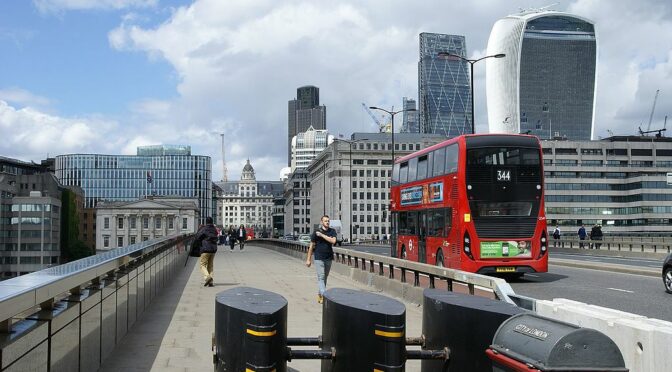
Similarly, it was not until the London Bridge car ramming in June this year that killed eight people, that UK Prime Minister Theresa May said ‘enough is enough’. But therein lies the problem.

Jihadists have been waging terror in Europe for years now and ‘enough’ was enough after the first attack. But European leaders have largely been in denial, only now beginning to concede there is a problem, and even now, many refuse to identify and confront the radical Islam at the root of this war.

These might be so-called ‘lone wolf’ terrorists, but they are united by the same homicidal ideology, with pledged allegiance to the Islamic State (Isis).

The vehicular terror attack in Barcelona follows a similar wave of car ramming attacks in Nice, London, Paris, Berlin, and Stockholm over the past year, which have claimed a combined total of 130 lives.

But the sober reality is that the wave of vehicular terror we are seeing across Europe now was pioneered by Palestinian terrorists in Israel, when the world mostly looked the other way, trying to downplay, excuse or just plain ignore the attacks, seeking to differentiate terror in Israel from terror in Europe. Today, Islamic jihadists are copying and exporting this murderous methodology across Europe.

So what can be done about this, and, specifically, how can Europe stop this wave of car rammings by ‘lone wolves’ and what can it learn from Israel? Continue reading

North Korea: America must prepare for war

A version of this article was first published in The Daily Express on 10th August 2017. © Richard Kemp

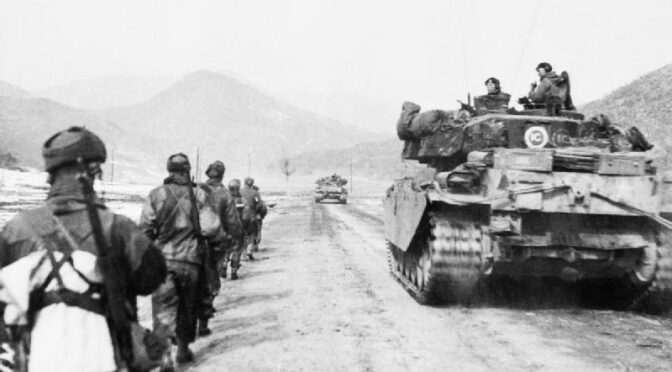
North Korea is not America’s problem alone but the world’s. Britain and the US last fought against its aggression during the war of 1950–1953 after North Korea invaded the south.

Today the threat is greater — a nuclear-armed state fast developing global strike capabilities. North Korea’s most recent missile test indicated a potential capability to reach much further than previously thought. Its theoretical range of around 10,000 kilometres would put Washington, New York and London within the target zone.

And the threat goes even further. Pyongyang has colluded extensively with Tehran over ballistic missile development and we must assume there has also been, or will be, cooperation on nuclear programmes, especially with $100 billion of financial assets released to Iran under President Obama’s nuclear deal. The ayatollahs — the world’s greatest supporter of terrorism — may not be the only rogue client looking to North Korea for nuclear capability.

Is the threat from Kim Jong-Un likely to materialize? He knows that a strike against US allies or territory, which he has been threatening, would unleash what President Trump describes as the ‘fire and fury’ of the most powerful military in the world and would end both him and his regime. But he is an unpredictable and irrational dictator, capable of over-ruling the more sober-headed advisers that some believe constrain him.

Diplomatic efforts to halt or contain North Korea’s pursuit of nuclear weapons over 25 years have all failed and will fail in the future given Pyongyang’s unwavering determination to continue developing them.

Nor will the sanctions regime ordered this week by the UN Security Council bring North Korea to heel any more than they have in the past. The country will cling on to its weapons programme to the end, even as its citizens starve in their millions. Continue reading

Dunkirk: the man who won the Second World War

A version of this article was first published in the Essex County Standard on 4th August 2017. © Richard Kemp

I saw old-fashioned British patriotism in Colchester after watching the movie Dunkirk at the Odeon last week. Tommy, a young soldier played by Fionn Whitehead, read the last words of Churchill’s ‘we shall fight on the beaches’ speech, the credits rolled and the audience broke into spontaneous applause. Exactly the reaction you would have seen to the newsreel report of Dunkirk in a Colchester cinema in June 1940.

The applause was not for the film, but for the Dunkirk spirit of embattled British soldiers, sailors, airmen and civilians pulling together in the face of the mind-numbing peril it so powerfully conveyed.

Unknown to most in the cinema, a former pupil at Colchester Royal Grammar School pervaded every moment of the film, though his only appearance was a single mention of the name: Ramsay.

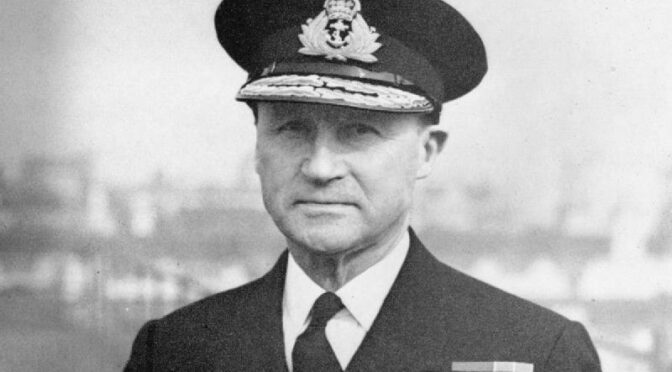
Admiral Ramsay

Vice Admiral Bertram Ramsay, at CRGS before joining the Royal Navy in 1898 aged 16, masterminded the Dunkirk evacuation and by doing so won the Second World War. Why?

In words Tommy reads out in the film, Churchill said to the Commons on 4 June 1940, the day Dunkirk ended: ‘We must be very careful not to assign to this deliverance the attributes of a victory. Wars are not won by evacuations’. But the evacuation of the British Army from Dunkirk — against all odds — was the turning point that paved the way to Allied victory over Nazi Germany five years later. Continue reading

Islamists may have already infiltrated our armed forces

Article published in The Times,  Tuesday 1 August 2017. © Richard Kemp

The sentencing of the Royal Marine-turned-terrorist Ciaran Maxwell exposes a key challenge facing the armed forces and police.

How did Maxwell get through the net? All recruits to the forces are subject to basic security vetting but it is far from foolproof. In the years before the Good Friday agreement vetting of recruits from Northern Ireland was much stricter, yet some extremists from both sides got in.

After the agreement, in the era of equal opportunities at any price, obsessive political correctness and a determination to increase recruitment among Northern Irish Catholics, vetting parameters and monitoring procedures changed. This made Maxwell’s entry and service in the Royal Marines far easier.

There is no doubt that the threat from dissidents will rise significantly in the coming years, partly in reaction to the increased influence of the DUP, so the potential for future infiltration remains. But that is the least of our problems. The understandable drive by the armed forces and police to recruit more Muslims, and a less understandable concern for ticking the politically correct box over operational effectiveness, combine into an unprecedented danger.

Most Muslims who join the armed forces and police undoubtedly do so for good patriotic reasons. But Islamic State is determined to infiltrate the forces and police, and has produced a manual that includes instructions on doing so.

The jihadists’ strategy of infiltration goes back years and despite the authorities rejecting hundreds on security grounds it is inconceivable that some have not succeeded in joining and are now ‘sleepers’, awaiting orders to strike.

We have seen the dangers of the enemy within. In Afghanistan 152 coalition troops were killed in 99 ‘green on blue’ attacks when trusted Afghan police and soldiers turned their guns on their comrades.

Armed forces members have access to sensitive intelligence, secure locations, members of the royal family, high-ranking officers and politicians, aircraft, tanks and nuclear submarines. Those with such potentially devastating opportunities have increased security vetting but what security vetting can be sure to detect an individual who is radicalised while serving, or pressurised to act by extremists who perhaps threaten his family?

The problem is exacerbated by a culture of political thought control under which soldiers and police officers are frightened to report suspicious behaviour for fear of being branded racist.