This is the real plan behind Putin’s drone incursion into Poland and Nato

Article published in The Daily Telegraph, 13 September 2025. © Richard Kemp

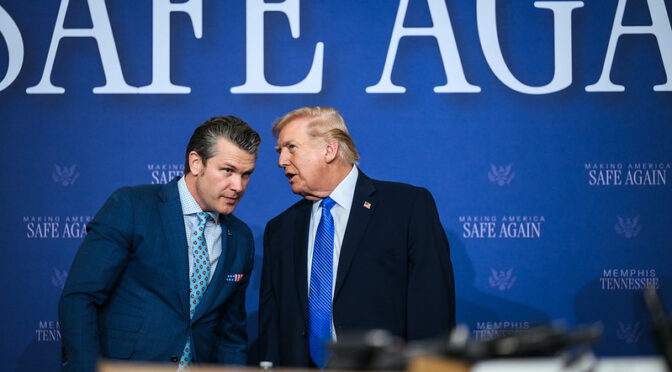
Following Russia’s drone incursion into Poland on Tuesday night, Defence Secretary John Healey says he has instructed our armed forces to provide options to bolster Nato’s air defences there. We have heard similar calls from other Nato countries, including France, Germany and the Netherlands, who have all said they will deploy additional defensive assets. This is exactly the wrong response and plays straight into Russian hands.

Polish prime minister Donald Tusk said the incident brought Poland closer to military conflict ‘than at any time since the second world war’, describing it as a ‘large-scale provocation’. Others, including Healey and a range of defence experts have said Russia was testing Nato’s response. None of that is true. Putin has no need to test our response to drones entering Nato airspace, because he already knows exactly what it will be: nothing.

Neither was this a probe to assess Warsaw’s air defences with a view to launching a much larger scale attack later on. Nor was it a provocation to lure Nato into a retaliatory attack by hitting targets on its territory. A maximum of 19 drones seem to have entered Polish airspace, nothing like sufficient force to precipitate a significant reaction. Nato itself proved that by saying it did not warrant triggering Article 5: an attack on one is an attack on all. Bear in mind that on the same night, 415 drones and 43 missiles were launched at Ukrainian cities. That is what a large-scale provocation looks like, Mr Tusk.

Yes, this was the most significant air incursion into Nato territory in its history. Yes, it was the first time Nato combat planes have shot down Russian drones – though it’s not the first time in recent memory that a Nato jet has shot down a Russian one. I’m not suggesting for a moment that we should let Putin off the hook for this or any other of his aggressions. But rather than resort to ill-considered and reflexive cries of ‘escalation’, we need to look at what happened in proportion, and above all we need to carefully analyse exactly what Putin really had in mind and how best to counter him. Continue reading

The last stronghold of Hamas is about to fall

Article published in The Daily Telegraph, 8 September 2025. © Richard Kemp

Last week Israel mobilised 60,000 more reservists – almost the size of the entire British regular army – to generate sufficient forces to launch an attack on Gaza City, pretty much Hamas’s last major stronghold. Over the previous week or so the IDF has been ratcheting up pressure on Hamas in the city, including the destruction on Friday of Mushtaha tower, a high rise building used for surveillance and other military purposes. The entire city is infested with terrorists and their infrastructure. Fortifications and military facilities are both above and below ground, and we are likely to see many more tower blocks and other buildings hit in the coming days before the expected assault begins.

There is an estimated one million civilians in Gaza City. Israel has already warned them to move to designated safer areas. Although most obviously want to leave so far only about 90,000 have done so. On Friday Hamas issued a specific order threatening civilians who leave. They are intent on sacrificing their own population to bring international pressure onto Israel to halt its offensive. Egypt is abetting Hamas by refusing to open its borders to give civilians temporary refuge. Most desperately want to find safety in Sinai and on recent visits into the Strip almost every one of the 100 or so Gazans I met told me exactly that. But to the contrary, since Israel declared its intention to deal with Hamas in Gaza City, Egypt has reinforced its defences on the border, fearing IDF advances will trigger overwhelming efforts by civilians to get through. ‘Displacement is not an option and it is a red line for Egypt and we will not allow it to happen,’ Egyptian Foreign Minister Badr Abdelatty said last week. That is a shocking self-indictment which violates Cairo’s binding obligations under international refugee treaties, never mind the demands of ordinary human decency.

In virtually every other conflict around the world, neighbouring states open their borders. For example during the Syrian civil war Arab countries and Turkey took in millions fleeing the fighting. The sparsely populated Sinai peninsula could not only provide immediate refuge, it could also be part of the ‘day after’ plan, allowing Gazans a place to live while the Strip is being rebuilt. One option would be for Saudi Arabia to purchase or lease land there, as it did with other Egyptian territories in 2017, giving Gazans temporary living space and the Egyptian economy a desperately-needed boost.

Meanwhile the IDF has been making immense efforts to ship thousands of tents and other supplies into the south, as well as beefing up the joint US-Israeli humanitarian aid distribution operation. It may be that increasing strikes into Gaza City will open the flood gates before the main offensive begins, as the very real dangers are hammered home, even to the extent of overcoming Hamas’s vicious stranglehold. Israel is legally obliged to do what it can to move civilians out of the danger zone, but that responsibility falls even more heavily on Hamas. By doing the opposite the terrorists are adding to their already bulging catalogue of war crimes.

Israel will have to fully encircle the city as the assault opens up. The IDF is facilitating humanitarian aid into Gaza City at the moment, but that will obviously have to stop as the forces push into the depths of the conurbation. Israel will then be accused of besieging and starving the remaining population by denying entry of food and other essential supplies. Unfortunately that is the unavoidable nature of this type of warfare and is legally permissible under the Hague and Geneva Conventions which were written by people who understood the harsh necessities of war, often from their own bitter experiences. The British military manual on the law of armed conflict makes this clear, providing the anticipated incidental harm to civilians is not disproportionate to the expected concrete military advantage and that the attacking commander allows civilians to leave before the area is sealed off. That process is already under way and given the IDF’s strong emphasis on minimising civilian harm, it would not surprise me if they continue to allow Gazans to leave even after the offensive begins, providing operational conditions permit, perhaps establishing evacuation corridors and defined pauses in hostilities.

The same principle of proportionality and warnings applies to civilians caught up in the fighting. The IDF has already issued general warnings and will no doubt continue to do so. They will also, as they have throughout this war, give specific warnings whenever they are able to civilians in or near locations to be attacked, which they did before striking the Mushtaha tower. The IDF has a more sophisticated system for mitigating civilian harm than any other armed forces in the world, developed over many years of fighting enemies that actually want to maximise the deaths of their own civilians. As well as focused warnings, that includes precision targeting, enabled by the best possible intelligence on both the enemy and civilians, and the use of munitions with the minimum necessary explosive power. Of course none of that will be considered by many in the media and international organizations who will continue to have their perspective manipulated, often only too willingly, by a highly developed Hamas propaganda regime.

As well as combatants and civilians, IDF commanders will be taking particular account of the remaining Israeli hostages, many of whom are believed to be inside the city. Hamas may already have moved some or all of them out or may attempt to do so as the offensive unfolds, depending on what they calculate to be the most effective way to exploit their most important bargaining chip.

Unless Hamas terrorists succumb to the growing IDF pressure, releasing the hostages and pulling out themselves, they will sentence the city and its inhabitants to the level of devastation that they have brought down onto the rest of the Strip. Assuming that does not happen, the coming battle of Gaza City may well be the most bloody fight of the conflict. That will bring massive international opprobrium, not on Hamas where it should fall, but on Israel. Despite the well-established anti-Israel narrative, this offensive is not a matter of choice for Jerusalem but a tragic necessity. No country that wanted to survive could take any other path.

The battle of Gaza City is beginning. Get ready for a barrage of Hamas lies

Article published in The Daily Telegraph, 24 August 2025. © Richard Kemp

The battle of Gaza City does not need to happen. The expected loss of human life and physical destruction could be avoided if Hamas laid down its arms and released the hostages. That is made much less likely by the words and actions of Western leaders including our own prime minister and foreign secretary. The pressure they are piling on Israel to end the war, including threats to recognise a ‘Palestinian state’, are understandably translated by Hamas into signals to them to fight on. Why would they give up the struggle, which has already cost Gazans so dearly, if there is a chance their enemy will be restrained by its own so-called allies? It is hard to reconcile the constant attacks on Israel’s vital self-defence with the near silence about the savages that started this war and keep it going.

But despite the complicity of Western leaders, Hamas has clearly been panicked by the IDF’s preparations to invade one of their last remaining strongholds. Having earlier rejected a ceasefire proposal Hamas have just accepted the same terms in the hope that will put a stop to, or at least delay, their eventual demise. There is a lesson here for Western leaders, applicable not just to the Middle East: threats of force with the means to back it up accompanied by unquestioned political will is the only language tyrants understand. Instead, what is the West’s response? To undermine it with every means at their disposal. And these are the self same faint-hearted leaders who think their security guarantees to Ukraine will be taken seriously.

Israel is mobilising 60,000 more reservists for what may be a five division assault on Gaza City. It has already begun operations to ‘shape the battlefield’, in military parlance, including air strikes against key targets and preparations to encircle the city with tanks and infantry. Up to a million civilians are at present in Gaza City, around half the population of the Strip, although many have now begun to head south. A large number of these, having previously evacuated, were forced back by Hamas to increase the number of human shields to die in the anticipated fighting there.

The IDF will do everything it can to clear out as many of them as possible before the attack begins, something they successfully achieved before assaulting Rafah in the south — another pivotal battle that Western leaders did their utmost to stop. Where will these civilians live and how will they survive? The IDF has demarcated humanitarian zones in the south but the UN has proven woefully unable or unwilling to provide effective support. Their meagre efforts will be strengthened by Israel — unprecedented by a combatant nation during any war. The Gaza Humanitarian Foundation, which gets aid to civilians and keeps it out of Hamas hands, is working to significantly expand its operations, which are now responsible for delivery of most aid into Gaza.

It’s going to be a tough fight for the IDF, the biggest battle they will have fought in Gaza. The city is the largest urban area in the Strip, with high-rise buildings, broad thoroughfares and narrow rat-runs, all adding complexity, chaos and intense danger for an attacking force. The defenders have had twenty years to prepare. Buildings Continue reading

Putin has cemented Russia’s status as a great power. Europe should be terrified

Article published in The Daily Telegraph, 16 August 2025. © Richard Kemp

Donald Trump and Vladimir Putin met as equals on American soil this week, not because Mr Trump is in thrall to Putin but because his advances into Ukraine have been unstoppable despite over three years of Western effort. Ukrainian forces have fought hard and with tremendous courage, skill and sacrifice.

They prevented the intended Russian blitzkrieg at the beginning of the war and have pushed Russia back in places. They even conducted audacious assaults into Russian territory and inflicted unexpected damage on Moscow’s forces including in the Black Sea and as far away as eastern Siberia.

But Putin still believes he can absorb whatever blows Kyiv throws at him and win even more territory as his forces push hard and continue to make progress in the Donbas. This region, rich in mineral wealth, is Russia’s main military focus. Pushing against well-prepared Ukrainian defences here has proven costly in men and munitions and has made slow progress.

Putin would prefer not to continue fighting for it if he can get it by other means and he told Mr Trump at Anchorage that the war could end if Ukraine withdraws from the 30 per cent of Donetsk that his forces have not yet conquered.

Volodymyr Zelensky will be reluctant to agree to that and has said that voluntarily ceding any Ukrainian territory would require constitutional change. He will have to balance that with his judgment on whether Ukrainian forces will be able to hold on to it if the war continues, and what the price of that might be.

That assessment will have to include the extent to which the West, eyeing the potential for peace, will continue to enable his defensive efforts and how effective Ukraine can be on its own. On top of that, Mr Zelensky will be mindful that at this stage in this extremely costly war, polling suggests that the majority of the population want to see its end, with significant proportions reluctantly willing to give up land. Continue reading

Europe’s leaders have failed Ukraine – they have no right to a seat at the table

Article published in The Daily Telegraph, 11 August 2025. © Richard Kemp

Ahead of Trump’s summit with Putin, President Macron’s plaintive cry that Europeans will ‘necessarily be part of the solution because their security depends on it’ rings hollow. What would the Europeans bring to the table in Alaska? They have no plan of their own and even if they had one, they have no means to implement it. And what is more they do not have the political will to do so.

When US and Russian leaders met to discuss carving up Europe, at Potsdam in 1945, the British prime minister was in the room. That was because Britain was a major military and economic power that had more than shouldered its burden of the fighting in the Second World War.

Nothing like that can be said of Britain or any other European country today. All have downgraded themselves to the role of spectator. It’s too late to be pleading that ‘our security depends on it’ when they have wilfully neglected their own security for decades. Every Western European nation, including our own, has been running down its armed forces almost to the point of irrelevance, very often papering over their true weakness with carefully spun readiness reports.

Even at the end of the Cold War, when Britain had four fighting divisions on the books, we were only able to deploy one very small one to the Gulf in 1991, and that was done by cannibalising the other three. By the time we came to Afghanistan and Iraq, Britain was never able to field sufficient forces for the task it gave itself, and had to be bailed out by the US in both theatres. The situation today is even more dire – and we have the strongest armed forces in Europe.

Across the continent, those politicians who see the need for powerful armed forces always complain that defence is not a vote-winner, and so funds needed to boost combat capabilities are spent instead on welfare, education, health, climate change, immigration subsidies and overseas aid. But a political leader’s job is not to follow public opinion; it is to shape it. Very few have actually been trying to make the case for defence.

In fact most of Europe’s leaders have been working against national unity, identity or patriotism, in favour of an integrationist agenda that undermines the whole purpose of national defence. Don’t think Putin didn’t pick up on that when he decided to invade Ukraine. He looked first at the United States and saw only weakness: his invasion began just months after Biden’s debacle in Afghanistan. Eyeing Europe he saw a continent unwilling to stick up for itself, consumed by identity politics and societal division, and unable to do anything at all to staunch the migrant flow engulfing it.

Putin also saw a continent, even after his invasions of Georgia in 2008 and Ukraine in 2014, that was willing to increase its energy dependency on Russia, and expose Ukraine to further aggression through the strategically illiterate Nord Stream gas pipelines.

And after three years of war, the gas keeps flowing into Europe and the euros keep flowing back into the Kremlin’s war chest. Even though the EU has reduced demand, last year it still imported €21.6bn worth. But don’t worry, there is a plan to phase out Russian gas consumption in three years’ time. The EU’s get tough on Putin policy faltered last month when Brussels struggled to agree on a proposed toughening of sanctions against Russia, though they were eventually adopted. That public show of disunity came after criticism of President Trump for delaying his own threatened sanctions.

We heard a lot about Starmer’s ‘Coalition of the Willing’ earlier in the year when Trump began to work on a peace deal. The contours of that plan were announced last month, effectively proposing an Anglo-French led multinational force of 50,000. I suspect in reality around half that number at best could be generated from those nations that might eventually step up. It appears that no boots on the ground are now on the cards, as originally suggested. That’s hardly surprising as Putin said any Nato forces deployed in Ukraine would become targets for attack.

Instead the idea is to provide experts to help regenerate Ukrainian forces after the war. Also envisaged is deployment of air forces ‘to deliver air policing’, whatever that might mean. I don’t anticipate dogfights between the Russian Air Force and the RAF.

Finally, there will be a maritime component providing specialist staff to accelerate mine clearance in the Black Sea. Last time this coalition was floated, Starmer admitted that there could be no such deployment without US security guarantees. Presumably that has not changed, making the whole project dependent on the good graces of President Trump.

So far, so feeble. Despite the European leaders’ fine words, ‘standing by Ukraine to the end’, and their disgruntlement at not being invited to Alaska, I suspect that the way events are expected to unfold actually suits many of them. They don’t want to go along with the vast expense involved in Trump’s plan to supply weapons funded by Europe. They don’t want to persist with sanctions on Russia that also bite them economically. They don’t want to have to live up to their new defence spending undertakings.

What they do want to do is get back to business as usual with Russia as soon as possible, no matter how precarious. Like the 2014 invasion of Crimea, they can live with that risk; the consequences will inevitably be someone else’s to deal with further down the road.

Whatever deal Trump is able to press on Zelensky may lead to at least a temporary ceasefire and that would be the answer to European leaders’ prayers. In fact, for many a ceasefire would be better than a full-blown peace agreement because it would keep Ukraine out of Nato and probably the EU as well, which would save a lot of problems especially with French farmers.

Meanwhile, when it all goes wrong, European hands are clean. After all, they were ready to back Ukraine to the hilt, weren’t they?

Image: Wikimedia Commons

Israel has little choice but to occupy Gaza

Article published in The Daily Telegraph, 8 August 2025. © Richard Kemp

Hamas’s unremitting intransigence over hostage release and a temporary peace settlement has brought Israel to the point of renewing offensive operations against the remaining areas of Gaza it does not yet control. Keir Starmer and the other national leaders who have been encouraging Hamas with symbolic gestures and roundly condemning Israel have contributed to this situation. Why would Hamas continue to negotiate if the Western world is doing its job for it?

The only effective action against Hamas has come not from diplomacy but military force, which pressured them into surrendering many of the hostages. The remaining living hostages are being starved to death, which we saw evidenced by recent images of two emaciated prisoners on their last legs. It looks like Israel’s renewed offensive is their final chance.

Likewise, Hamas is not going to surrender its control over Gaza without being forced to do so. Israel is therefore left with no choice other than to press ahead and seize control over the rest of Gaza. That is far from a small undertaking. The areas it possesses now – about 75 per cent of the territory – are largely unpopulated. The remainder, in the north, centre and south, is where the vast majority of Gazans now live. Many of them will have to be re-located.

If any time were ripe to allow them safe haven out of the firing line it is now. Rather than wringing their hands about yet another Israeli offensive, the likes of Starmer and Macron should be publicly and privately pressuring Egypt to open its borders and allow those that want to get away to find temporary safety in the Sinai. But that hasn’t been on the agenda so far and is unlikely to be now.

Meanwhile Israel is going to have to step up its already considerable humanitarian efforts. Most effective would be the expansion of the American Gaza Humanitarian Foundation, which is at present distributing most of the aid going into Gaza via its secure distribution sites. That would be opposed by the UN and Hamas. As the IDF close in, Hamas are going to have less say in that or anything else. As for the UN, they too should be pushing Egypt to open humanitarian zones where aid could be distributed freely. Failing that, they should come up with a better idea than just leaving their own aid scorching in the sun and undelivered inside the Gaza border.

Prime Minister Netanyahu has made it clear that, once Hamas is dealt with, he does not want Israel to remain in control of Gaza. He envisages some kind of administration by Arab countries. That has been under discussion pretty much since this war began, but he is deliberately unspecific for obvious reasons, and in any case nothing can be concluded until the war is won. Whatever arrangements are put in place, the IDF will have to maintain overall security control which will include occupation and freedom of movement in critical defensive zones to prevent another October 7.

Threats of recognition of a Palestinian state, arms embargoes and other Western measures against Israel are not going to stop this offensive moving on to its final conclusion. The only thing that might Continue reading

Images of Gaza show the reality of urban warfare, not genocide

Article published in The Daily Telegraph, 5 August 2025. © Richard Kemp

We have all seen pictures and videos of large-scale destruction in Gaza since the war began. The level of devastation has again hit the headlines after photos were taken from above by journalists on board the recent Jordanian humanitarian air-drops. I’ve seen it from the ground myself and the demolition is indeed truly horrifying; in places there is nothing other than piles of rubble where buildings once stood, as far as the eye can see. But this ruination should be no surprise to those who understand the way Hamas turned the whole of Gaza into a military redoubt disguised as a civilian population centre.

If you see pictures following any urban battle you will observe widespread destruction of buildings after opposing forces have fought a bloody fight to gain dominance. If there is greater devastation in Gaza than on some other battlegrounds, it can be understood by Hamas’s contemptible way of fighting. First, the tunnel network. Tunnels have featured in armed combat for hundreds of years. But nothing before has come close to Hamas’s utilisation of the 400 miles of tunnels it dug over 16 years as its primary military infrastructure, shielded beneath populated areas. The inter-connected network includes tunnels just beneath the surface and down to a depth of more than 200 feet. They are used for battle manoeuvre, weapons storage, command posts and living quarters.

The IDF estimates that Hamas excavated over 5,000 shafts to enter and leave the tunnels. Many of these were in ordinary houses, hospitals, schools, mosques and other buildings. To destroy tunnels or deny terrorists their use, it has often been necessary to blow up their exits and entrances. Many tunnel entrances have been booby-trapped with explosives, as have other sections of the tunnels, often concealed in the walls. Many IDF soldiers have been killed by them while entering or fighting through the tunnels.

As well as the tunnels, vast numbers of buildings of all types in Gaza have been used by Hamas as arms dumps, including in houses and apartments. In some areas every house, every other house or every third house contains weapons and explosives. I have seen boxes of grenades beneath children’s beds, rocket launchers in kitchen cupboards and rifles stashed underneath piles of clothing. So rather than blow up the buildings, why can the IDF not simply raid the houses and seize the weapons? Because it is estimated that some 40 per cent of buildings in Gaza were also booby-trapped to kill soldiers doing exactly that, and quite a few have died. The same applies to troops entering buildings to deal with terrorists within.

The IDF reports that of the total of 250,000 structures in Gaza, some 100,000 have been rigged with explosives. Many of these booby-traps are covered by covert cameras so they can be remotely detonated when the troops approach. An IDF soldier’s life is worth no less than anyone else’s, and destruction of a building is preferable to unnecessary death. Back in the 1980s, in Belfast during the Troubles, we discovered a house that was similarly booby-trapped by the IRA, with multiple concealed devices intended to kill soldiers and police. In that case, we also decided, rather than risk the lives of our bomb disposal experts, we would use explosives to do the job.

On top of all this, sometimes IDF precision strikes against a specific building have triggered secondary blasts as the shock-waves radiate outward and detonate Hamas explosive and missile stores, bringing down adjacent buildings as well. In other cases, an attack against a section of tunnel causes more extensive collapse, undermining the foundations of buildings above.

Many don’t want to accept that all of this devastation is by Hamas’s deliberate design. They transformed Gaza into an engine of war, harnessing the entire population, every building, every inch of land, along with much of the vast quantity of international aid poured in to help their people. Just as they blame Israel for the civilian death and hunger they themselves brought about, they also blame Israel for the physical destruction. They know this tactic works only too well, bringing international condemnation of Israel from governments, international bodies, human rights groups and the media. Those who are naive enough to walk into their trap simply validate Hamas’s horrific methods and ensure that, given the chance, they will be used repeatedly in the future.

Image: Wikimedia Commons

The murderous, thieving overlords of Hamas are the true oppressors of the Palestinians

Article published in The Daily Telegraph, 3 August 2025. © Richard Kemp

Despite calls from the Arab League to disarm, Hamas says it refuses to do so until an independent Palestinian state is established. By that the terrorist group means it will never disarm, because it knows that no Palestinian state will ever be established. Certainly not the state they envisage, which is a far cry from the two-state solution that Starmer, Macron and Carney seem to have in mind. Hamas want a one-state solution, an Islamic State encompassing the entirety of Israel, Gaza and the West Bank. Hence their slogan ‘from the river to the sea’, mouthed incessantly on university campuses and the streets of our cities by uncomprehending hordes. Hamas’s founding charter demands the annihilation of Israel and the death of Jews everywhere. Despite a cosmetic ‘revision’ and English language statements made to fool Westerners, this has never been repudiated and remains their unwavering goal.

The leadership of Hamas are vicious, bloodthirsty terrorists, many of them multi millionaires enriched by decades stealing aid meant for the people of Gaza. But they are far from being fools. They understand that Israel will never surrender to them and they will never have the military power to drive the Israelis out. Their best shot was October 7 in 2023, which was supposed to be supported by an invasion by Hezbollah from the north and backed by rocket fire from Iran’s other ‘ring of fire’ terrorist proxies. They murdered, raped, tortured, kidnapped and burned but failed to achieve what they intended.

Instead their actions drove Gaza to ruin and decimated their own fighting strength. But they will fight on fanatically for as long as they are physically able to do so. Hamas is a miniature version of al-Qaeda. Like Hamas, Bin Laden sought an Islamic caliphate, but on a global scale. And like Hamas, he didn’t expect to achieve it in his life-time or even for generations. He saw his role as killing, destruction and economic damage. The purpose was to demoralise the West and ‘apostate’ Muslim regimes, creating strife and division around the world until eventually the caliphate would be established. Continue reading

Even the Arab world is no longer reticent about the threat of Hamas

Article published in The Daily Telegraph, 30 July 2025. © Richard Kemp

In a historic first, all 22 members of the Arab League called on Hamas to lay down its arms and end its rule in Gaza. In fact, despite their public condemnations during this war, most Arab countries have been on Israel’s side and against Hamas since the start. They recognise the dangers posed to their own countries by Hamas, a proxy of Iran and offshoot of the Muslim Brotherhood, both of which represent existential threats to them. Hence Saudi Arabia, Jordan and the UAE helped defend Israel against Iranian missile and drone attacks last year. Some Arab countries have also provided other forms of military support to Israel during its war on Hamas, although these have been very much under the radar.

While they recognise the security benefits Israel brings, none of that means that after decades of aggression against the Jewish state, Arab countries are now in love with it. Indeed, the New York Declaration signed yesterday at the UN, which condemned Hamas, was also sharply critical of Israel for its conduct in the war and actions in the West Bank. The declaration was made during a ministerial-level conference led by France and aimed towards generating progress on a two-state solution at the UN General Assembly in September. Not surprisingly the conference, which David Lammy attended, was boycotted by the US and Israel.

Both countries understand that a two-state solution is not only impossible but also extremely dangerous. That’s not because the Palestinian Arabs don’t deserve self-determination. Nor is it due to Israeli nationalistic intransigence, but to the overriding need to defend itself. We saw what happened when a two-state solution was tried in Gaza. The whole place was turned by Islamic jihadists into an engine of war and resulted in the horrors of October 7. Is it reasonable to expect Jerusalem to repeat such a devastatingly failed experiment and extend it into the West Bank where the risks are far greater?

When so many lives are at stake and Israel’s very existence under threat, hoping for the best – as the likes of Starmer and Macron seem to be doing – is not going to cut it. They need to understand that the Israel-Palestinian conflict is not about land or Arab self-determination, it’s a religious war to annihilate the Jewish state and always has been. The Palestinians have been offered their own state many times, including a proposal to Palestinian Authority President Mahmoud Abbas to cede virtually all of the West Bank, build a tunnel connecting it to Gaza and relinquish Israeli sovereignty over East Jerusalem. Every single offer has been rejected. Even the so-called moderate Abbas, while begrudgingly recognising the existence of Israel, doesn’t recognise its ‘right to exist’– hence his continual demands for the ‘right of return’, code for swamping Israel with millions more Arabs with the intention of ending its existence. That same ‘right of return’ is also enshrined in the New York Declaration.

The document calls as well for ‘an independent, sovereign, and democratic Palestinian State’. Let’s just pause on democracy. Abbas Continue reading

Britain help fight for Taiwan? It would be funny if it wasn’t so sad

Article published in The Daily Telegraph, 28 July 2025. © Richard Kemp

If Britain wants to be taken seriously on the world stage, it would do better to build up its defence capabilities than make empty threats to China. Yesterday in Australia, Defence Secretary John Healey declared that Britain would be ready to fight if a conflict breaks out over Taiwan. In other words, if China invades Taiwan, which is a distinct possibility. President Xi has made it clear he intends to bring the country under Chinese rule and has not excluded the use of force. Indeed, Beijing has been preparing for exactly that for years.

Speaking from the deck of HMS Prince of Wales, Healey said deterrence was achieved by securing ‘peace through strength’. He’s right about that, but deterrence is based on actual military strength, not mere words. Britain no longer has anything close to the military power it needs, and certainly not sufficient to fight a war in the Pacific, even alongside allies. It’s one thing to dock an aircraft carrier in Darwin and sail freedom of navigation patrols through the benign Taiwan Strait. It is quite another to engage in combat against a nuclear-armed power with the largest army and navy in the world.

For that matter, despite the value for diplomacy and national prestige of a series of flag-waving tours around the Pacific, would it not be better to deploy the HMS Prince of Wales to confront Chinese-sponsored aggression in the Red Sea? For almost two years, the Houthis have been harassing and attacking international shipping there, yet both our carriers have been kept safely away. Earlier in the year a British tanker was set on fire by a Houthi missile and the next month a British cargo vessel had to be abandoned after it was hit. Having sunk two ships so far this month, the Houthis vowed yesterday to step up their attacks.

The Houthis’ aggression is supported by the regime in Beijing, which supplies them with parts for missiles and drones as well as software and satellite intelligence for targeting ships. Instead of dealing with this present threat and sending a real deterrent message to China, we are pulling our last remaining frigate out of the region, to return home to the scrapyard. That will leave just a solitary minesweeper in Bahrain, with no other warships available.

That’s hardly surprising. The once mighty Royal Navy surface fleet is now down to 14 frigates and destroyers, of which only around half are available at any time, plus the two carriers. After decades of cuts, the Army and Royal Air Force are in an equally enfeebled state. In view of this, Healey’s words are unlikely to give Beijing’s political leaders or military planners furrowed brows never mind cause them to re-think their planned aggression. Nor will the recent defence review’s findings. Against the new Nato benchmark requiring 5 per cent of GDP to be spent on defence, the Government has said it will increase to 2.5 per cent by the end of this parliament with less-than-convincing assurances of an increase to 3.5 per cent by 2034.

Healey’s promised ‘peace through strength’ requires not only military but also political strength. Starmer’s ‘coalition of the willing’ plans to deploy UK ground forces to Ukraine now seem to have evaporated altogether and we don’t have the resolve necessary to defend our own shores from rubber boat flotillas. Even if we had the wherewithal to fight the Chinese, our Government would no more send British sailors to meet their fate in the Pacific than to send infantrymen to fight and die in Eastern Europe. And don’t think Xi Jinping doesn’t know it.

Image: Nato/Flickr