
Article published in The Daily Telegraph, 10 November 2026. © Richard Kemp
The UK has been a secure base for American combat planes for more than a century, most extensively during the Second World War. It seems the security of US airbases here is now in question. This week several military planes, including air-to-air refuelling tankers, were moved from RAF Mildenhall – a major American airbase in Suffolk – to other locations including Germany. That was reportedly because of a threat from Iran.
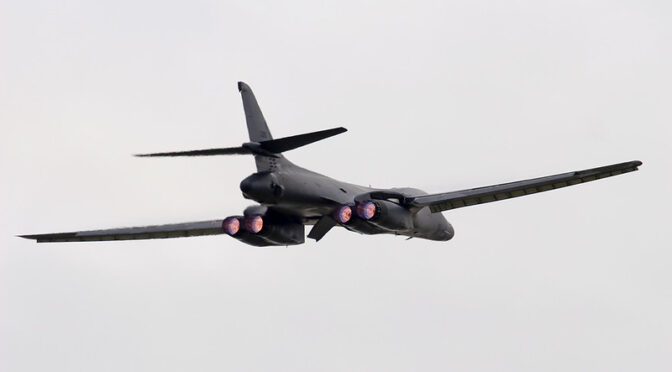
This follows the withdrawal to the US of B-1 bombers after another suspected Iranian plot to attack their base at RAF Fairford in Gloucestershire in October. And last year Palestine Action – a designated terrorist organisation – broke into RAF Brize Norton in Oxfordshire and expensively damaged two RAF Voyager aircraft.
All of this is about the war against Iran and its jihadist proxies by Israel and America. The UK’s involvement has been marginal, including allowing US planes to operate above the Middle East from British bases and our forces assisting allies in the region with air defence. The RAF also flew reconnaissance missions over Gaza during the height of the conflict there to locate Israeli hostages held by Hamas terrorists.
The vulnerabilities that the Mildenhall, Fairford and Brize Norton events suggest raise two issues. First, physical security. There was an obvious failure at Brize Norton and the Government has since tightened things up. But how seriously the security of other bases is taken must be in question given America’s reaction to the Iranian threats. The US does not seem to have such concerns about its airbases in Turkey or Qatar – or indeed Ramstein in Germany, where some of the Mildenhall planes were re-located.
Equally, aircraft sitting exposed on the ground are in line of sight to several publicly accessible positions. Many of these are used by plane spotters and it would not be hard for jihadists to avoid attention. A terrorist breaking through the perimeter fence – as occurred at Brize Norton – could also quickly reach these planes.
Military air stations are notoriously hard to secure because of the sheer acreage they occupy. But that is no excuse for anything other than the strongest possible security. This would include beefed-up physical protection as well as intensive patrol activity in and around the bases by armed troops. The RAF Regiment exists to fulfil this function overseas and should now be deployed in the UK. All of this is extremely expensive, but what is the cost of a loss of confidence from our major ally on whom we depend so much?
The second issue these events raise is the wider security of the UK. A Telegraph investigation earlier this year revealed that Tehran was using immigrant smuggling routes into Britain, positioning operatives in London to await orders. Yet those pouring illegally across the Channel are simply dispersed around the country without anything like adequate security checks. Rather than attempting to seal our borders against these threats the Government plans to open them even further.
The Home Secretary recently announced plans to admit large numbers of Gazan refugees starting this year. Much of Gaza is still run by Hamas, an Iranian proxy. How will these radicalised citizens of a terror regime be checked to ensure they are not a threat to our country? The answer is simple and troubling: they will not be.
The only body capable of meaningful screening of these people is Israeli intelligence and you can bet our Government will not go cap in hand to the hated Zionists. Don’t forget, according to prime minister Benjamin Netanyahu, Israel provided intelligence to Britain warning of the planned attack against RAF Fairford. That was rewarded, within days, by our Foreign Secretary threatening Israel with sanctions.
Not only is the Government opening up our borders to even greater Iranian hostility, it is also seeking to burn its boats with the world experts on the very terrorist regime that threatens us.
All this despite the head of MI5 reporting last October that his agency had tracked more than 20 potentially lethal Iranian-backed plots in Britain in the preceding year. Meanwhile TV channels which are members of the Islamic Radio and Television Union, linked to the IRGC, broadcast in Britain.
The picture is bleak. Military security seems to be inadequate to keep American aircraft and personnel safe. The floodgates for Iranian-controlled jihadists are opening wider. Our enemies are allowed to spread their propaganda openly. We attack one of our most important intelligence allies.
In the Second World War, when we took security seriously, we interned enemy civilians rather than letting them run loose on state benefits. We certainly wouldn’t have allowed Lord Haw Haw to broadcast his anti-British agitprop from London rather than Berlin. Toleration has gone too far. It has caused unprecedented damage to the relationship with our most important ally and given succour to those who would attack us. Above all it has increased the threat to our own people.
At the Labour conference in September, Defence Secretary Wes Streeting pledged to build ‘a country ready to fight and a Britain worth fighting for’. Are we supposed to take such rhetoric seriously when his government is unwilling to put in place effective defences against an enemy that is already waging war against us?
Streeting also spoke recently of deterrence against Russia. Someone should tell him that weakness does not deter, it provokes.
Image: B-1 B takes off from RAF Fairford (Rob Schleiffert/Flickr)