
Article published in The Daily Mail, 1 August 2026. © Richard Kemp
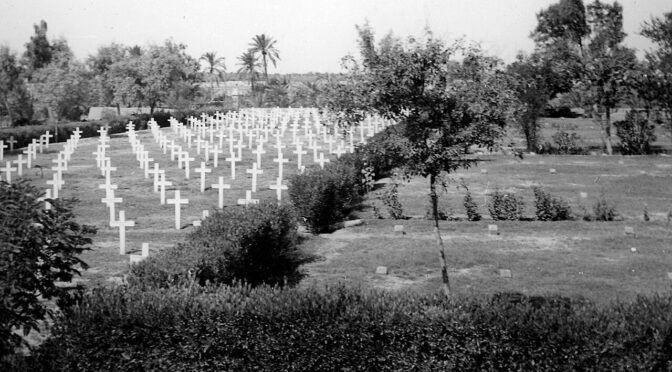
Among the 800 men whose gravestones and memorial panels at the First and Second War World cemetery in Iraq were summarily pulverised on the orders of the Ministry of Defence, 130 were from a forerunner of my own regiment, the Royal Anglian.
So you can appreciate why I am appalled at such a callous disdain for the memory of the fallen.
It does not matter that some of these men died over a century ago, what matters is that they did so fighting for their country. Such patriotism and heroism should never be treated so shabbily.
The Army removed the headstones for their own safety in 2003, after British forces invaded Saddam Hussein’s Iraq.
No doubt the removal was carried out by soldiers in good faith that the stones would be replaced when the time was right.
But that faith was betrayed after 18 months, when it appears that the MoD decided the stones should be destroyed. Having fought in Iraq and Afghanistan, I can sympathise with soldiers given wrong-headed orders from London, clueless as to the reality on the ground.
In Kabul, we had intelligence of a planned coup d’etat on the parliament building. We understood that the thrust of the assault would be carried out by tanks. Only, when I proposed to lay anti-tank mines around the insurgents’ tank enclosure, the MoD’s response was one of horror – along the lines of ‘You do realise Afghanistan is the most land-mined country in the world?’ A few more to prevent huge political upheaval seemed a price worth paying to me, but we thwarted the coup nonetheless.
Soldiers follow orders, and those in Iraq who helped in the destruction of the headstones would have done so with a heavy heart. It must have been galling to know that a drainage ditch had been filled in a way that was so obscene to the memory of past British soldiers.
But what twists the knife is the evasiveness of the top brass. They have stonewalled the attempts of relatives of those buried there to get to the truth. Only begrudgingly revealing the sorry episode after being taken to the Information Commissioner.
But even public shame about their behaviour has not prompted the MoD to make right the scandal. The cemetery in Basra is still bare, the fallen still unmarked. It beggars belief that new headstones have not been erected in their place.
These are soldiers who died in the most horrific of circumstances, often under constant gunfire, in punishing heat and with little in the way of sanitary facilities, meaning that death by dysentery was grimly common.
They deserve a cemetery that befits their sacrifice.
If the MoD believes new headstones would be vandalised I urge them to visit Kabul, where locals respectfully tend to a British cemetery I visited there. To ensure the upkeep of the Basra site, surely we could expect the co-operation of the Iraqi government, which is the recipient of many billions of pounds in British economic aid?
Even if the cemetery is vandalised, so be it: that can be repaired. What cannot is the permanent deletion of their memory from the ground where they are buried – effectively killing them twice.
The MoD must correct its terrible mistake: failure to do so shames our country.
Image: Wikimedia Commons
_and_Plot_6_(WW1)_taken_in_1951_(CWGC_Archives).jpg)